Non-Religious Mindfulness Exercises: Secular Practices for a Calmer Mind
Non-religious mindfulness exercises offer secular, science-backed ways to reduce stress and focus. Try simple, belief-free practices you can start in minutes.
By Paddy Picho. Published 2026-06-13. Updated 2026-06-13.
Non-religious mindfulness exercises are secular, science-backed practices that train your attention and calm your mind without any spiritual beliefs, rituals, or doctrine — just simple techniques for noticing the present moment. At its core, mindfulness is a mental skill: paying attention to what's happening right now, on purpose, without judging it. No faith required.
If you've been curious about mindfulness but turned off by incense, chanting, or anything that felt "spiritual," this guide is for you. Everything here is grounded, practical, and belief-free.
Mindfulness Without the Mysticism
Let's clear up a common misconception. Mindfulness and meditation have roots in various traditions, but the techniques themselves are simply ways to work with your attention.
Stripped down, mindfulness is just two things:
- Noticing what's happening in the present moment — your breath, your body, your surroundings.
- Gently returning your focus when your mind wanders (which it always will).
Critical fact: Secular mindfulness is studied extensively in psychology and medicine. Programs like Mindfulness-Based Stress Reduction (MBSR) are used in hospitals and clinics specifically *because* they're stripped of religious content — making them accessible to everyone.
You don't have to believe in anything. You just have to practice paying attention.
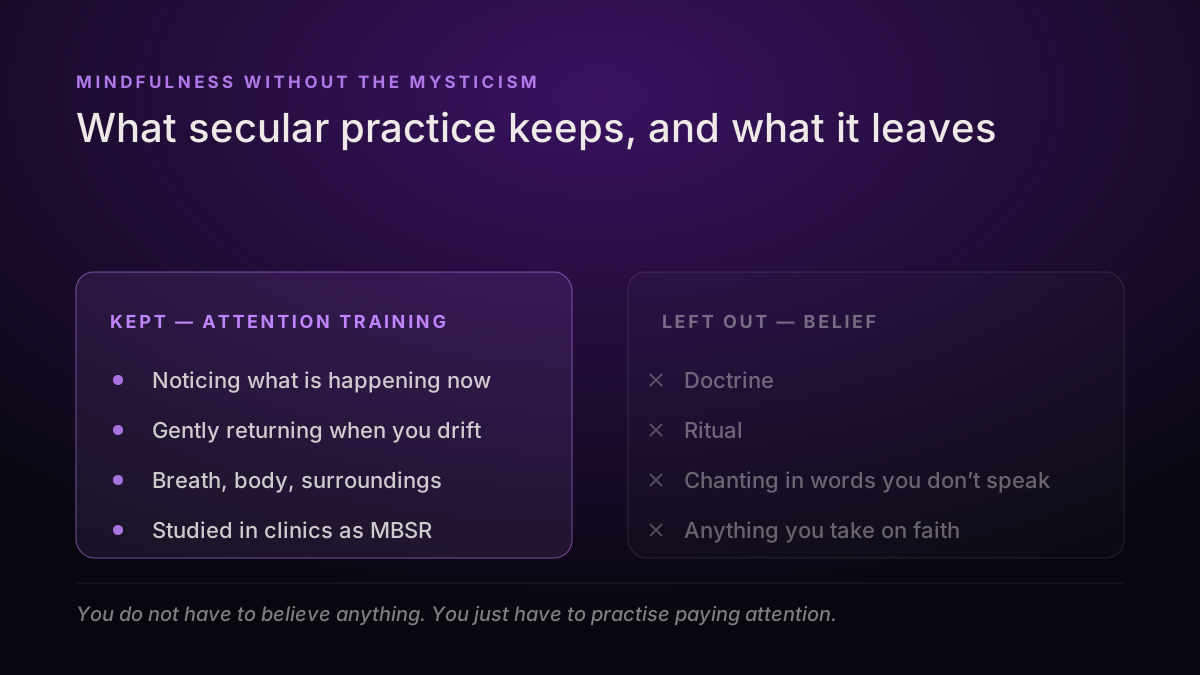
*Secular mindfulness keeps the attention-training core and leaves the belief systems out entirely.*
Why It's Worth Doing
The benefits are well-documented and entirely practical:
- Lower stress and reduced anxiety.
- Better focus and concentration.
- Improved emotional regulation — more space between feeling and reaction.
- Better sleep and a calmer baseline mood.
Pro Tip: Think of mindfulness like physical exercise for your attention. You're not trying to achieve a mystical state — you're just doing reps that make your mind steadier over time.
6 Non-Religious Mindfulness Exercises to Try
Each of these takes just a few minutes. Pick one and start today.
1. Mindful Breathing
The simplest entry point.
- Sit comfortably and notice your breath — don't change it, just observe.
- Feel the air coming in and going out.
- When your mind wanders, gently return to the breath. Start with 2–3 minutes.
2. The Body Scan
Great for releasing physical tension.
- Sit or lie down.
- Bring attention slowly through your body — feet, legs, torso, arms, head.
- Notice sensations without trying to change them. Just observe and move on.
3. The 5-4-3-2-1 Grounding Exercise
Perfect for anxious or scattered moments. Notice:
- 5 things you can see.
- 4 things you can feel.
- 3 things you can hear.
- 2 things you can smell.
- 1 thing you can taste.
4. Mindful Walking
No sitting still required.
- Walk slowly and feel each step — the lift, the movement, the contact with the ground.
- When your mind drifts, return to the sensation of walking.
5. The Mindful Pause
A reset you can do anywhere, anytime.
- Stop for 30 seconds.
- Take three slow breaths.
- Notice how you feel, without judging it. Then continue your day.
6. Single-Tasking
Mindfulness baked into ordinary activity.
- Pick one routine task — washing dishes, drinking coffee, walking to your car.
- Give it your full attention, noticing the details you'd normally miss.
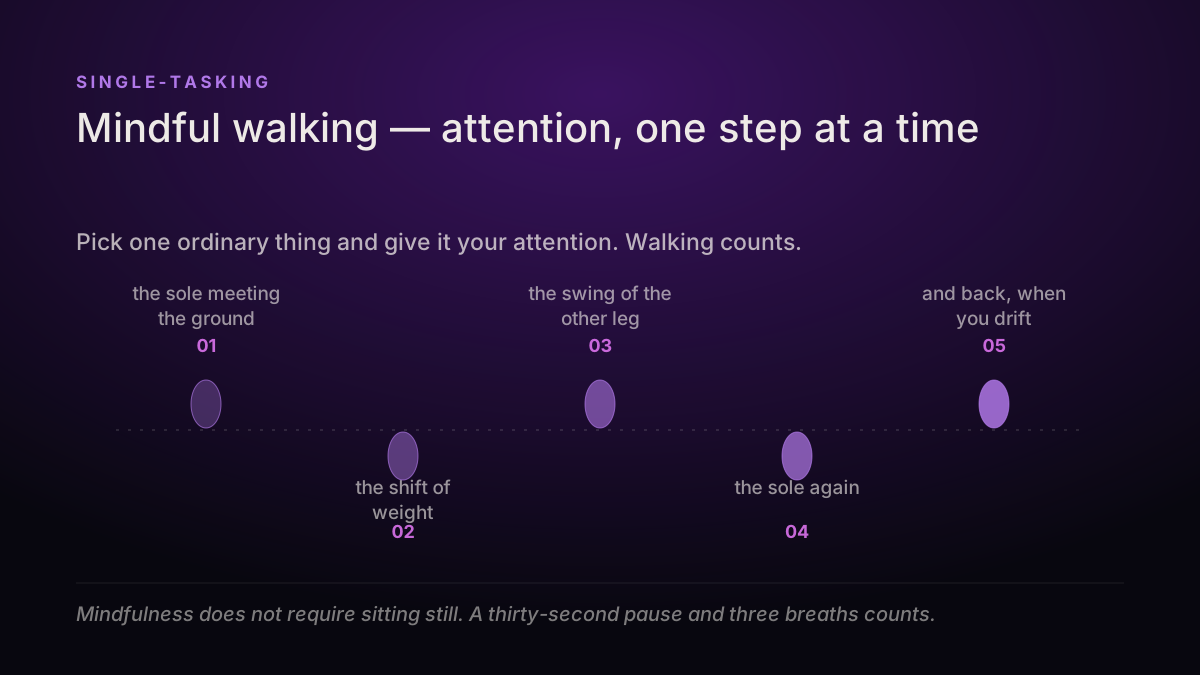
*Mindfulness doesn't require sitting still — everyday activities like walking are perfect practice grounds.*
How to Build a Habit That Sticks
You don't need a long daily session to benefit. Consistency beats duration.
- Start tiny. Two minutes a day is plenty at first.
- Anchor it to a routine you already have — after brushing your teeth, before your first coffee.
- Expect a wandering mind. Noticing the wandering *is* the exercise, not a failure.
- Drop the pressure. There's no "perfect" mindfulness. Showing up is the win.
Takeaway: You're not trying to stop your thoughts or feel blissful. You're simply practicing the skill of noticing the present moment — and that skill gets stronger every time you return to it.
Frequently Asked Questions
Can mindfulness really be completely non-religious?
Yes. The core techniques are just attention training and can be practiced with zero spiritual content. Secular programs used in hospitals and schools are deliberately stripped of religious elements precisely so anyone can use them.
Is mindfulness the same as meditation?
Not exactly. Meditation is a broad category of mental practices; mindfulness is one approach focused on present-moment awareness. You can practice mindfulness in formal meditation *or* informally throughout your day, like during mindful walking.
How long until I notice benefits?
Many people feel calmer after a single session. Lasting benefits — steadier focus, lower baseline stress — typically build over a few weeks of short, regular practice.
What if I can't stop my thoughts?
You're not supposed to. Thoughts will keep coming, and that's normal. Mindfulness isn't about a blank mind — it's about gently noticing when you've drifted and returning your attention. That return is the entire practice.
*Mindfulness doesn't ask you to believe anything. It just invites you to show up to your own life a little more often — and that's a skill anyone can build.*