Binaural Beats for Lucid Dreaming: How to Use Theta Waves to Wake Up Inside Dreams
Binaural beats for lucid dreaming use theta and gamma frequencies to encourage dream awareness. Learn which Hz to use, the science, and a step-by-step routine.
By Paddy Picho. Published 2026-06-13. Updated 2026-06-13.
Binaural beats for lucid dreaming are audio tracks that play two slightly different frequencies in each ear to nudge your brain toward the theta and gamma brainwave states linked to dream awareness — the moments when you can realize you're dreaming while still asleep. They're best thought of as a helpful trigger paired with proper technique, not a one-click switch into lucidity.
If you want to become aware *inside* your dreams — and maybe even steer them — this guide explains how binaural beats fit in, which frequencies matter, and how to build a routine that actually works.
What Are Binaural Beats?
A binaural beat is an audio illusion. When you play one tone in your left ear (say, 200 Hz) and a slightly different tone in your right (say, 206 Hz), your brain perceives a third "beat" at the difference — in this case, 6 Hz.
That perceived beat sits in a specific brainwave range. The theory of brainwave entrainment suggests your brain may gently sync toward that frequency.
Critical fact: Binaural beats only work with stereo headphones. The effect depends on each ear receiving a different tone — play them on a speaker and the illusion disappears entirely.
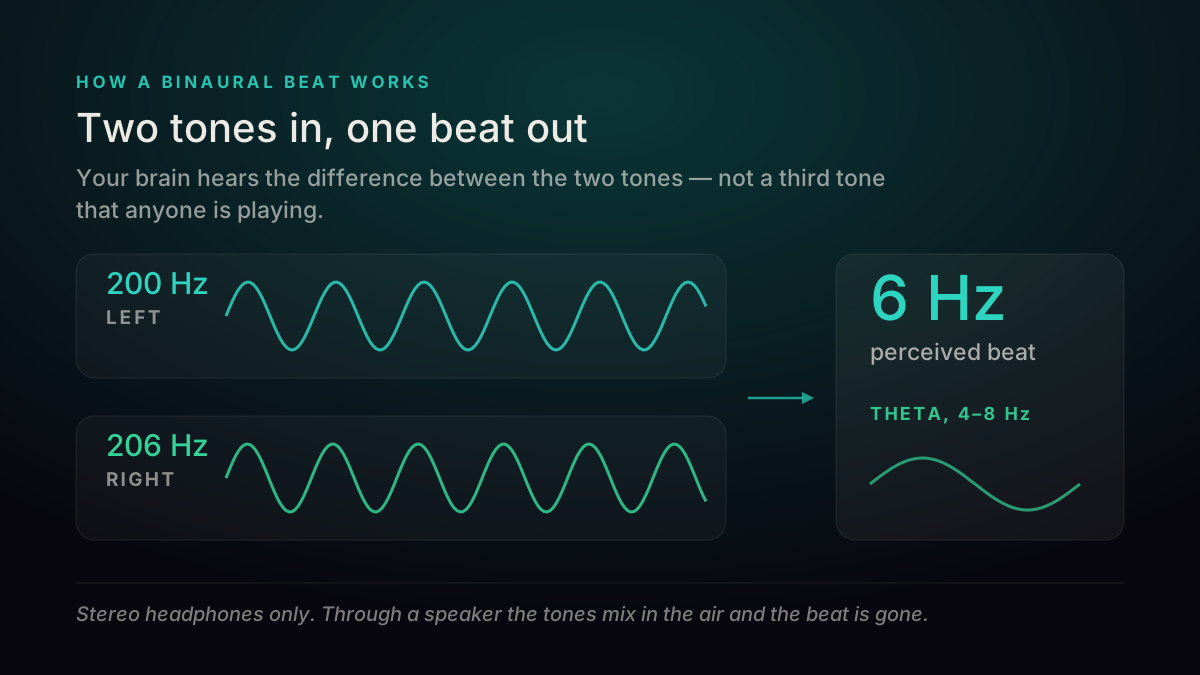
*The "beat" you perceive is the difference between the two tones — and that difference is what targets a brainwave state.*
Lucid Dreaming and the Theta State
To understand why binaural beats are used here, you need to know which brainwaves matter for dreaming.
The key states are:
- Theta (4–8 Hz) — the dreamy, hypnagogic state of light sleep and deep relaxation. Closely tied to REM dreaming.
- Gamma (around 40 Hz) — associated with heightened awareness. Some research links a spike in gamma activity to the *moment* a dream becomes lucid.
The logic is simple: most lucid dreams happen during REM sleep, where theta activity is prominent. By encouraging theta (and sometimes gamma), binaural beats aim to make that aware-while-dreaming state more likely.
Pro Tip: Be realistic about the science. Evidence for binaural beats is promising but limited. They can deepen relaxation and prime the right state — but lucidity still depends mostly on your *technique and intention*, not the audio alone.
Which Frequencies to Use
Match the frequency to the stage you're targeting.
- To relax and fall asleep: Theta, 4–7 Hz. Calms the mind and eases you toward the dreamy hypnagogic state.
- For dream awareness during REM: Theta, around 6 Hz, is the most popular choice.
- For the lucidity "spark": Some tracks layer in gamma, ~40 Hz, based on research tying gamma to dream awareness.
A common approach is a track that starts in theta to ease you down, then introduces gamma during the window when REM is likely.
A Step-by-Step Lucid Dreaming Routine
Binaural beats work best combined with proven lucid dreaming techniques. Here's a practical method.
The Setup
- Use comfortable stereo headphones — ideally ones you can sleep in, like sleep earbuds or a headband.
- Keep the volume low. It should be just audible, never jarring.
- Choose a theta track for falling asleep.
The Technique (Best Used With WBTB)
The Wake Back To Bed (WBTB) method dramatically improves your odds:
- Sleep for about 5 hours — this lands you near a long REM period.
- Wake up, stay up for 15–30 minutes, and keep your mind gently focused on lucid dreaming.
- Go back to bed and put on your binaural beats (theta, or theta-into-gamma).
- As you drift off, repeat a clear intention: *"I will know that I'm dreaming."*
- Stay passively aware as you fall asleep — notice the dreamlike images that appear.
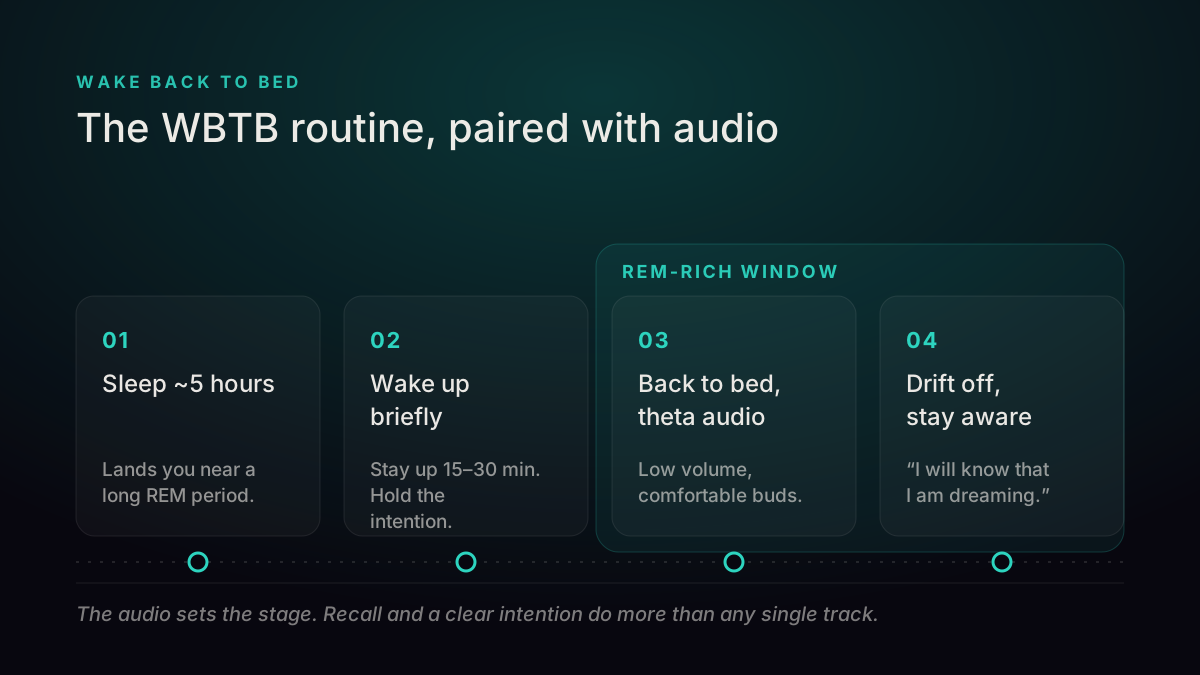
*Pairing binaural beats with the WBTB method targets the REM-rich window where lucid dreams are most likely.*
Takeaway: The audio sets the stage; your intention is the star. Reality checks during the day and a strong "I will become lucid" intention at night matter more than any single track.
Tips for Better Results
- Practice reality checks during the day (e.g., look at your hands, count your fingers). Habits carry into dreams.
- Keep a dream journal. Better dream recall is the single biggest predictor of lucid success.
- Be patient. Lucidity is a skill that builds over weeks, not a guaranteed nightly event.
- Prioritize good sleep. Don't sacrifice rest chasing lucidity — tired brains dream poorly.
Frequently Asked Questions
Do binaural beats actually cause lucid dreams?
Not on their own. They can promote relaxation and encourage the theta state linked to REM, which *supports* lucidity. But the evidence is limited, and results depend heavily on pairing them with techniques like WBTB, reality checks, and strong intention.
What frequency is best for lucid dreaming?
Theta, around 6 Hz, is the most common choice for encouraging dream awareness. Some tracks add gamma (~40 Hz) to target the heightened awareness associated with becoming lucid.
Are binaural beats safe to listen to while sleeping?
For most people, yes, at a low, comfortable volume. Use sleep-friendly headphones to avoid discomfort. If you have a seizure disorder or any neurological condition, check with your doctor first.
Why aren't they working for me?
The most common reasons are weak dream recall, inconsistent practice, or skipping the technique side entirely. Start a dream journal, add daily reality checks, and try the WBTB method — those typically matter more than the audio.
*Becoming aware inside a dream is one of the most remarkable experiences a mind can have. Set the stage with sound, hold your intention, and be patient — your first lucid dream may be closer than you think.*