Meditation for Poker Players: Master Tilt, Focus, and Patience
Meditation for poker players controls tilt, sharpens focus, and builds emotional discipline. Practical mental-game techniques for the table and between sessions.
By Paddy Picho. Published 2026-06-13. Updated 2026-06-13.
Meditation for poker players is mental-game training that helps you control tilt, sustain focus through long sessions, and make calm decisions when variance hits hard. It works by widening the gap between what happens (a bad beat) and how you react (a reckless re-raise) — and that gap is where good poker decisions live.
Everyone studies ranges and pot odds. Far fewer players train the one thing that quietly bleeds their bankroll: emotional control. This is that edge.
The Real Leak: Your Nervous System
You can know the math perfectly and still lose if your emotions hijack your decisions. That's tilt — and it's a physiological event, not a character flaw.
Here's what poker does to your brain and body:
- Variance triggers genuine stress responses after bad beats.
- Coolers and downswings create frustration that leaks into your next hand.
- Long sessions drain focus, leading to fatigue-driven mistakes.
- Pressure spikes adrenaline, narrowing your thinking right when you need range and nuance.
Critical fact: When you tilt, the rational, calculating part of your brain gets overridden by the threat-response system. You quite literally cannot access your best strategic thinking while flooded with stress hormones. Calming the body is what brings the strategist back online.
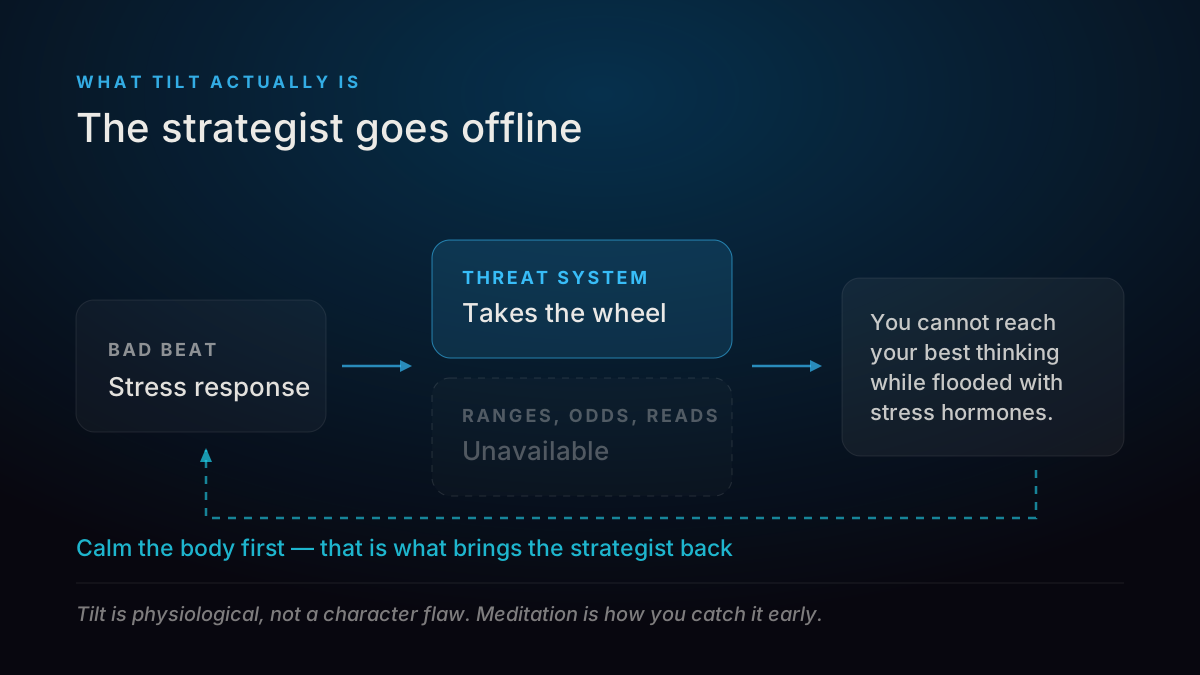
*Tilt isn't weakness — it's your nervous system overriding your strategy. Meditation trains you to recognize and reset it.*
Core Skill: Watching Thoughts Without Acting
The foundation of poker meditation is non-reactive awareness — noticing an emotion or urge without immediately obeying it.
Practice looks like this:
- Sit quietly and follow your breath.
- When a thought or feeling pops up — boredom, frustration, an itch to check your phone — just notice it.
- Label it: *"frustration,"* *"impatience,"* *"craving action."*
- Let it pass without acting on it. Return to the breath.
This is the exact muscle you use at the table when you fold a hand you *want* to play. You're rehearsing discipline off the felt so it's available on it.
At-the-Table Techniques
These are discreet and fast — no one will know you're doing them.
The Reset Breath (After a Bad Beat)
When you feel the heat of a cooler:
- Take one slow breath in, then a long, slow breath out.
- Feel your feet on the floor and your hands on the table.
- Remind yourself: *"One hand doesn't define the session. Play the next hand well."*
The Patience Anchor (During Card-Dead Stretches)
Boredom is a leak. Instead of forcing action:
- Use the downtime to follow a few quiet breaths.
- Stay present and keep observing opponents.
- Let patience become an active skill, not a punishment.
Pro Tip: The fold you make out of discipline saves you more money over a career than the hero call you make out of ego ever wins. Meditation is how you make discipline your default.
The Pre-Decision Pause
Before a big decision, take one breath. That single beat slows your system enough to think in ranges instead of reacting on emotion.
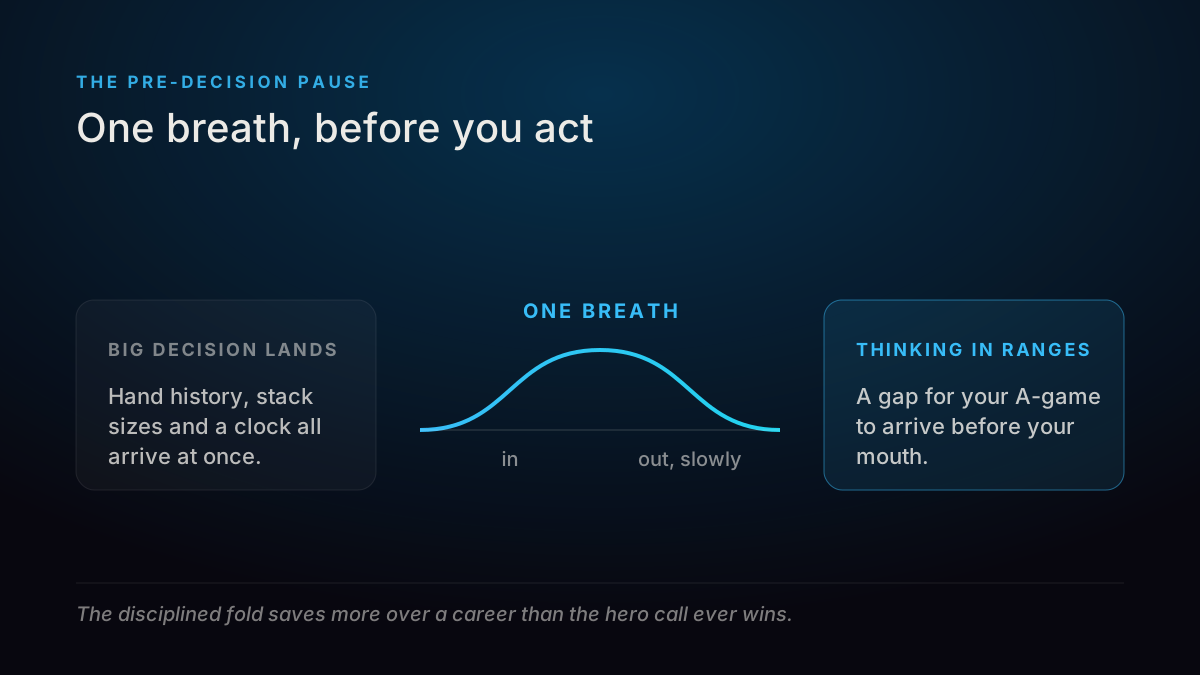
*A single breath before a major decision is often the difference between your A-game and an emotional punt.*
Between Sessions: Building Durability
The off-table work is where lasting emotional control gets built.
- Daily practice: 5–10 minutes of breath-focused meditation trains the attention muscle.
- Session review: Notice not just *what* you played, but *how you felt* when you made mistakes. Tilt has patterns.
- Pre-session ritual: Three slow breaths and a clear intention before you sit down — calm, patient, focused.
- Bankroll mindset: Meditation helps you sit with the discomfort of variance without making fear-based decisions.
Takeaway: Strategy gets you to the table. Emotional discipline is what lets you actually execute it when real money and real pressure are on the line.
Frequently Asked Questions
Can meditation really stop me from tilting?
It won't make you feel nothing — that's not the goal. It builds the awareness to *catch* tilt early and the calm to choose your response, so frustration stops dictating your bet sizing.
How long before I see results in my game?
Many players notice steadier emotions within a couple of weeks of short daily practice. The deeper benefit — staying composed through a brutal downswing — grows over months.
Do online players benefit too, or just live?
Both. Online play adds multi-tabling fatigue and faster variance, so focus and reset skills matter just as much. The at-the-table techniques work whether the felt is real or virtual.
Is this just for high-stakes pros?
Not at all. Tilt costs recreational players just as much, proportionally. Anyone who's ever made an angry call after a bad beat can sharpen their edge with this.
*The math is only half the game. Train your mind, and you'll keep the chips your strategy earns you.*