Mindfulness for Software Developers: Beat Burnout and Code Clearer
Mindfulness for software developers cuts coding fatigue, debugging stress, and burnout. Practical desk-friendly techniques to restore mental clarity and focus.
By Paddy Picho. Published 2026-06-13. Updated 2026-06-13.
Mindfulness for software developers is the practice of training focused, non-reactive attention so you can reduce coding fatigue, manage debugging stress, and protect yourself from burnout — without leaving your desk. In plain terms, it's a set of short mental resets that calm an overloaded brain and restore the mental clarity you need to actually solve hard problems.
If you've ever stared at a bug for an hour, only to spot it thirty seconds after stepping away, you already understand the core idea. Mindfulness just makes that "step away" deliberate and repeatable.
Why Developers Are Wired for Burnout
The job rewards deep concentration, then constantly interrupts it. That tension is exhausting.
Consider what a normal day demands:
- Context switching between tickets, Slack, code reviews, and meetings.
- Cognitive load from holding entire systems in your head.
- Debugging stress — the frustration loop of "why won't this work?"
- On-call anxiety and the pressure of production incidents.
Critical fact: Every interruption costs more than the interruption itself. Research on "flow state" suggests it can take 15–20 minutes to fully re-enter deep focus after a single context switch. Protecting attention is a productivity strategy, not a luxury.
Over months, this drains you. The result is developer burnout: cynicism, fatigue, and the creeping sense that you've lost your edge.
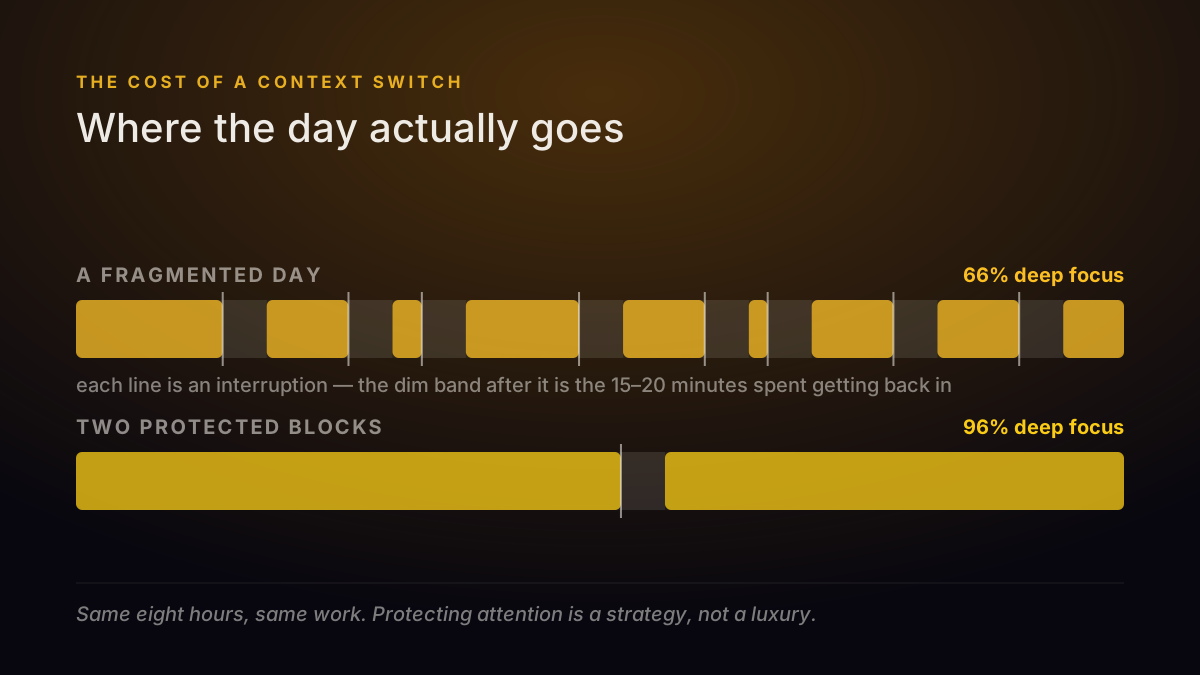
*Fragmented attention is the silent tax on developer productivity — mindfulness helps you reclaim it.*
The Core Skill: Single-Tasking on Purpose
Mindfulness isn't about emptying your mind. It's about choosing where your attention goes — and noticing when it drifts.
For developers, the highest-leverage version is single-tasking:
- Pick one task. Close the other tabs and tickets.
- Notice the urge to check Slack or your phone — and let it pass without acting.
- When your mind wanders, gently bring it back to the code in front of you.
- Work in focused blocks, then take a real break.
That "gently bring it back" step is the entire skill. You'll do it hundreds of times. Each return is a rep at the gym for your focus.
Desk-Friendly Techniques (No Cushion Required)
These fit into a normal coding day. No one around you will even notice.
1. The Three-Breath Reset
Use this between tasks or before a tricky problem.
- Sit back from the keyboard.
- Take three slow breaths, exhaling longer than you inhale.
- On the last exhale, ask: *"What's the one thing that matters right now?"*
2. The Compile-Time Pause
You wait for builds, tests, and deploys anyway. Use that dead time.
- Instead of doom-scrolling, rest your eyes on something distant.
- Feel your feet on the floor and your breath moving.
- Let the wait become a micro-recovery instead of more stimulation.
3. The Frustration Circuit-Breaker
When debugging stress spikes and you feel the heat rising:
- Name it: "I'm frustrated." Naming an emotion reduces its grip.
- Stand up. Physically leave the chair for 60 seconds.
- Breathe out slowly three times.
- Return and re-read the problem as if you're seeing it fresh.
Pro Tip: That bug you can't crack is often a signal that your brain is fatigued, not that you're failing. The break isn't avoidance — it's the fastest path to the fix.
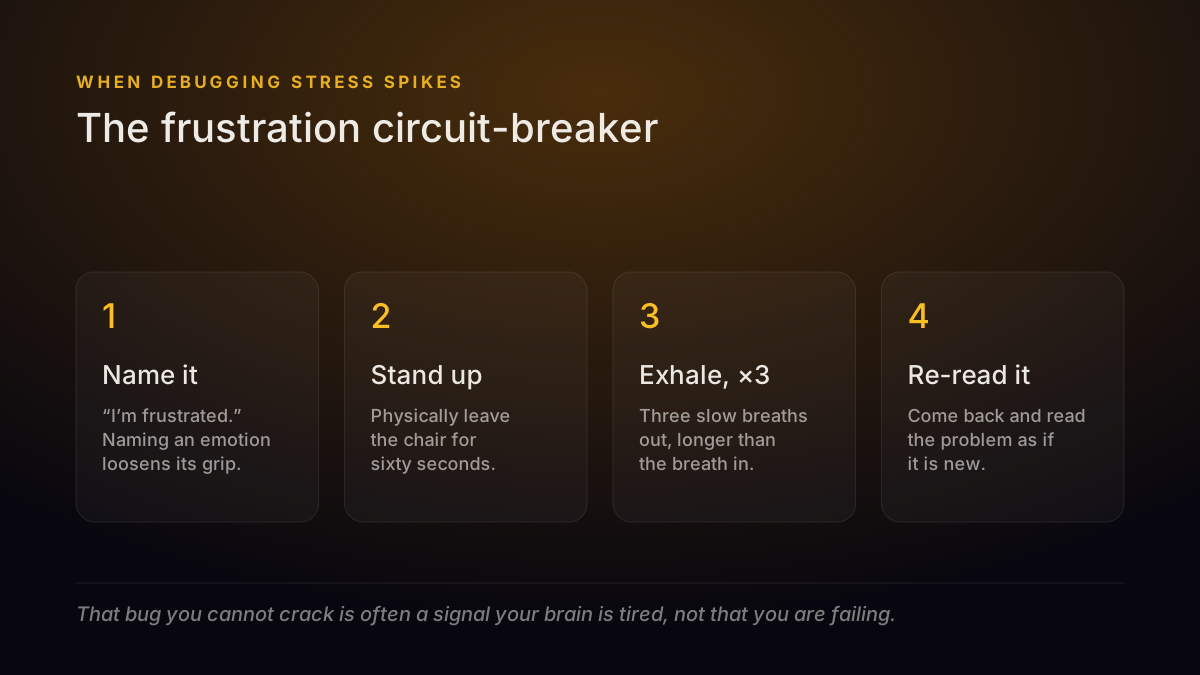
*Stepping away on purpose is how you turn debugging frustration into the "aha" moment.*
A Simple Daily Rhythm
You don't need a 30-minute morning routine. Anchor mindfulness to your existing workflow.
- Start of day: One minute of breathing before opening your editor. Set an intention.
- Pomodoro breaks: Use the break to actually rest your mind, not to switch screens.
- Before meetings: Three breaths to arrive present instead of mentally still in your code.
- End of day: A "shutdown ritual" — write tomorrow's first task, then close the laptop and let work go.
Takeaway: Sustainable focus beats heroic all-nighters. Small, consistent resets protect both your code quality and your long-term love for the craft.
Frequently Asked Questions
Will mindfulness actually make me a better programmer?
Indirectly, yes. It won't write your code, but by improving focus, reducing reactivity, and lowering stress, it helps you think more clearly — which means fewer careless bugs and better decisions under pressure.
I don't have time to meditate. What's the minimum?
Three slow breaths between tasks. That's it. The goal is frequency, not duration — a few seconds many times a day beats one long session you'll skip when you're busy.
Does this help with imposter syndrome?
It can. Mindfulness teaches you to observe anxious thoughts ("everyone codes better than me") without believing every one of them. That small gap between thought and reaction is where confidence grows.
How is this different from just taking breaks?
Ordinary breaks often swap one screen for another. Mindful breaks deliberately rest your attention, which is what actually restores mental clarity and prevents coding fatigue.
*Your brain is your primary dev tool. Maintaining it isn't slacking off — it's the most important refactor you'll do all week.*