IV — The Emperor
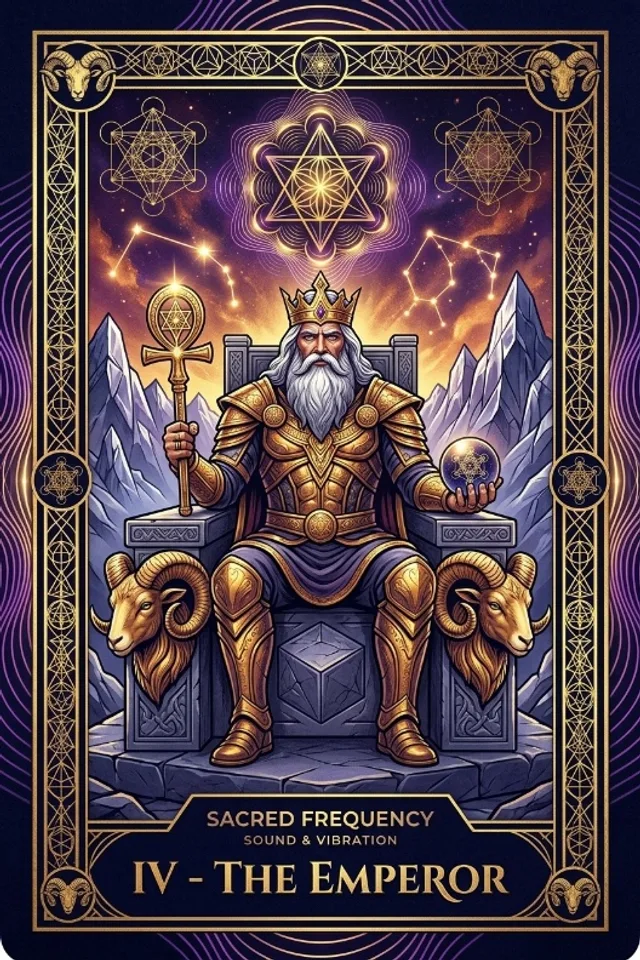
Structure, boundaries, and the usefulness of limits.
- Arcana
- Major
- Number
- IV
- Traditional element
- Fire
- Traditional astrology
- Aries
- Paired Solfeggio tone
- 174 Hz
The Emperor upright
Keywords: Structure, Boundaries, Order, Authority.
The Emperor is the card of the frame rather than the picture. Traditionally he stands for authority, but he reads more usefully as structure: the constraints, routines and refusals that make freedom workable rather than theoretical.
The Emperor reversed
Keywords: Rigidity, Unexamined rules, No structure at all.
Reversed tends to indicate structure that has outlived its reason — rules kept because they are old — or its absence, where everything is negotiable and therefore exhausting. Ask which of your rules you have never actually examined.
Sit with this
Which boundary, if you held it properly for a month, would change the most?
The paired tone
174 Hz is the lowest Solfeggio tone and is traditionally used for grounding and a sense of security, which is the Emperor's function: a floor to stand on.
Common questions
What does The Emperor mean in tarot?
Structure, boundaries, and the usefulness of limits. The Emperor is the card of the frame rather than the picture. Traditionally he stands for authority, but he reads more usefully as structure: the constraints, routines and refusals that make freedom workable rather than theoretical.
What does The Emperor reversed mean?
Reversed tends to indicate structure that has outlived its reason — rules kept because they are old — or its absence, where everything is negotiable and therefore exhausting. Ask which of your rules you have never actually examined.
Is The Emperor a good card?
Neither. On this site no card is read as good or bad luck — The Emperor is a frame for looking at a situation, and whether that frame is welcome depends entirely on what you are looking at.
This card is a reflection prompt, not a prediction.